 Metal Roofing
Is Metal Roofing Worth the Higher Upfront Cost?
Metal roofing used to be something you saw on commercial buildings and old barns. Over the last decade, it's become increasingly common on residential homes — and for good reason. But the upfront cost is real, and it's worth understanding exactly what you're buying before making a decision that'll be on your house for the next 50 years.
The Basic Cost Comparison
A standard architectural asphalt shingle roof typically costs between $4 and $7 per square foot installed, depending on roof complexity and material quality. A metal roof — standing-seam or exposed-fastener panel — generally runs between $9 and $16 per square foot installed.
On an average 2,000-square-foot home, that's a difference of roughly $10,000 to $20,000 upfront. That's a significant gap. Whether it's worth it depends entirely on how long you plan to stay in the home and what you value in a roofing system.
Lifespan: Where Metal Wins Decisively
A well-installed architectural shingle roof lasts 20 to 30 years under normal conditions. A properly installed metal roof lasts 40 to 70 years — often the lifetime of the home. That's not a small difference.
Over a 60-year period, you might install two or three asphalt roofs versus one metal roof. When you add up the cost of those replacements — including labor, disposal, and the inevitable increases in material costs over time — the metal roof often comes out ahead on total cost of ownership.
The key phrase is "if you plan to stay." If you're in your forever home, metal is almost always the better long-term investment. If you're planning to sell in five years, the return on investment from a premium metal roof is harder to justify — though it does add to appraised value and can be a strong selling point.
Energy Efficiency
Metal roofs reflect solar radiant heat rather than absorbing it the way asphalt shingles do. In South Carolina's hot summers, this can meaningfully reduce cooling costs — estimates typically range from 10% to 25% savings on cooling energy depending on the home, insulation levels, and roof color.
Cool-roof certified metal panels in light colors or with special reflective coatings perform best. Dark-colored metal roofs still outperform asphalt on reflectivity, but the gains are more modest.
Durability and Maintenance
Metal roofs are exceptionally resistant to the conditions that damage asphalt shingles:
- Wind — Standing-seam metal panels can handle winds well above 100 mph when properly installed, compared to typical shingle ratings of 60 to 130 mph depending on grade
- Hail — Impact-resistant metal panels hold up better to hail than most shingle products
- Fire — Metal roofing is non-combustible and typically carries a Class A fire rating
- Moss and algae — Metal doesn't support organic growth the way shingles do
Maintenance requirements are minimal — occasional inspection and cleaning is typically all that's needed. There are no granules to lose, no shingles to crack, and no organic material to degrade.
What About Noise?
One of the most common objections to metal roofing is the concern about rain noise. In practice, a metal roof installed over solid decking with proper insulation and underlayment is no noisier than an asphalt roof during rain. Many homeowners report finding the sound pleasant — a soft drumming rather than anything jarring.
The loud rain-on-metal sound is associated with open-air structures like barns and carports where there's no decking or insulation to dampen it. A residential installation is a different situation entirely.
Types of Metal Roofing
Not all metal roofing is the same. The two most common residential options are:
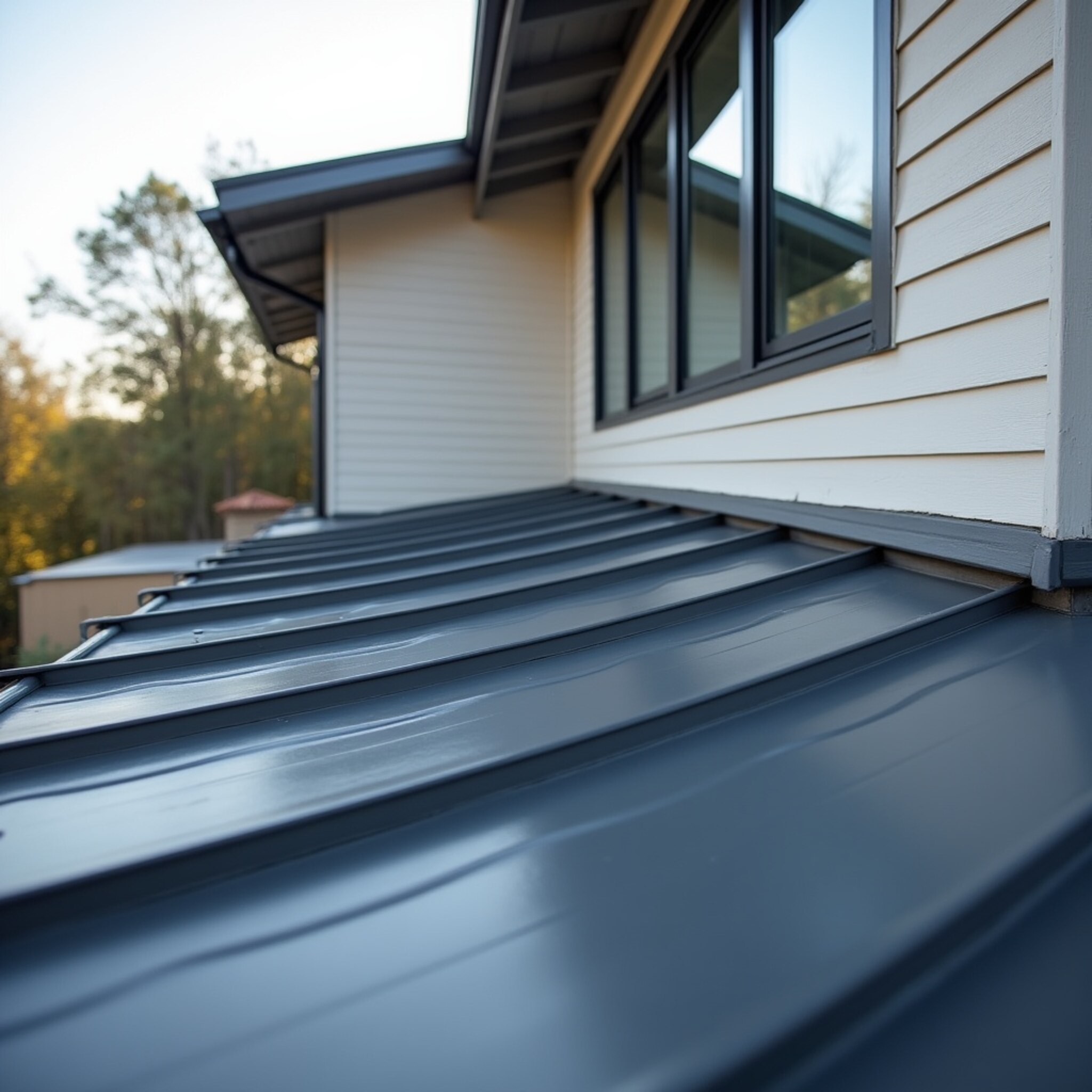
- Standing-seam — Raised seams that lock panels together without exposed fasteners. The premium option — cleaner look, better weather resistance, and easier thermal expansion. More expensive.
- Exposed-fastener panels — Screws are visible through the surface. More affordable, widely used on agricultural and commercial buildings. Seals around the fasteners can eventually need attention.
For most residential applications where longevity and appearance are priorities, standing-seam is the better choice. If budget is the primary constraint, exposed-fastener panels are still a significant upgrade over asphalt in terms of durability.
The Bottom Line
Metal roofing is worth the cost if you're planning to stay in your home long-term, if you value lower maintenance, and if energy efficiency matters to you. It's harder to justify if you're planning to move soon or if the upfront cost would create financial strain.
The best way to evaluate it for your specific home is to get an honest estimate that shows you both options side by side — including projected lifespan, warranty terms, and any available financing. That's exactly what we'll provide at a free estimate.